


press Release
Mount Kenya Wildlife Conservancy (MKWC) Receives Four Male Mountain Bongos to Strengthen Breeding and Rewilding Programme
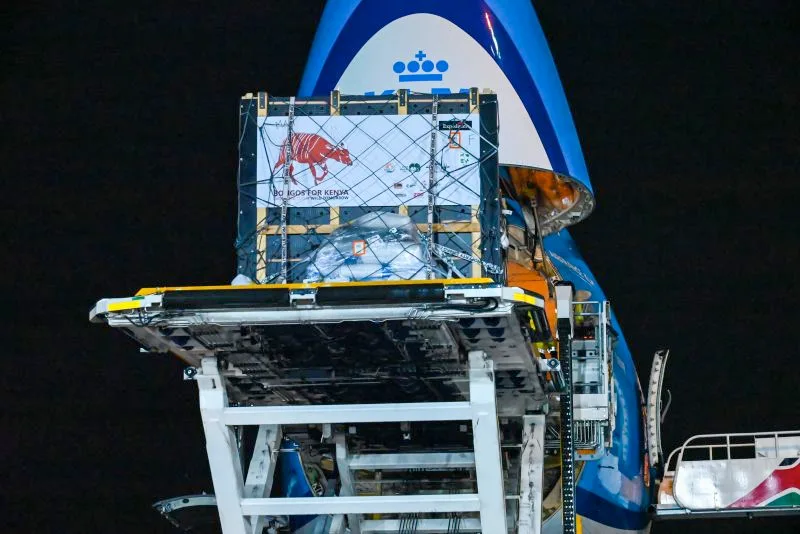
Nairobi, Kenya, April 28, 2026 — Mount Kenya Wildlife Conservancy (MKWC) today received four male Mountain Bongos (Tragelaphus eurycerus isaaci) at Jomo Kenyatta International Airport (JKIA) as part of a coordinated conservation initiative in partnership with the Kenya Wildlife Service (KWS) and the European Association of Zoos and Aquaria (EAZA).
The arrival ceremony was officiated by Cabinet Secretary for Tourism and Wildlife, Hon. Rebecca Miano, alongside KWS Director General Prof. Erustus Kanga and MKWC Patron Humphrey Kariuki. The animals were repatriated from European zoological institutions as part of an international breeding and genetic management programme aimed at securing the future of the critically endangered Mountain Bongo.
Cabinet Secretary Hon. Rebecca Miano said the importation of the four male antelopes marked a significant step in Kenya’s broader Mountain Bongo recovery agenda:
This moment demonstrates Kenya’s commitment to safeguarding its natural heritage through science-driven, partnership-led conservation. Each animal returned strengthens the National Mountain Bongo Recovery Plan and reinforces our broader strategy for recovering endangered species. It also reaffirms Kenya’s leadership in global wildlife conservation and sustainable ecosystem management. The breeding and rewilding programme at MKWC provides a model for future species recovery efforts, showing how coordinated action can deliver measurable outcomes.
The four male Mountain bongos, imported through a strategic partnership between KWS, MKWC and the European conservation network, will be integrated into MKWC’s breeding programme. The new male Mountain Bongos will be valuable to expand breeding capacity, strengthen genetic diversity, and accelerate rewilding and reintroduction of the species across its historic range.
Speaking at the arrival ceremony, KWS Director General Dr. Erustus Kanga said:
“The return of these four individuals reinforces Kenya’s conservation efforts and strengthens our ability to rebuild viable Mountain Bongo populations that are genetically diverse and ecologically resilient. Our focus is not only on increasing numbers, but on restoring functional populations capable of thriving independently in secure habitats across the country. This can only be achieved and anchored through sustained investment in species recovery and habitat restoration, guided by science and a long-term vision for conservation outcomes.”
Since 2004, MKWC has developed one of the world’s most successful mountain bongo conservation programmes, achieving a managed population of more than 100 individuals as of January 2026, demonstrating the viability of species restoration through structured breeding, habitat management, and deliberate conservation efforts.
MKWC Patron Humphrey Kariuki said the arrival marks a turning point for the conservancy’s breeding and rewilding ambitions:
“This is an important milestone for MKWC’s mountain bongo breeding and rewilding programme as we continue to accelerate progress achieved over the years. The support of the Government of Kenya, Kenya Wildlife Service, EAZA, and other international partners has been instrumental in strengthening our conservation efforts. These four male bongos will reinforce the existing population of over 100 individuals and enhance breeding capacity, providing an opportunity to expand our breeding herds and bringing us closer to a future where the mountain bongo once again thrives in the wild.”
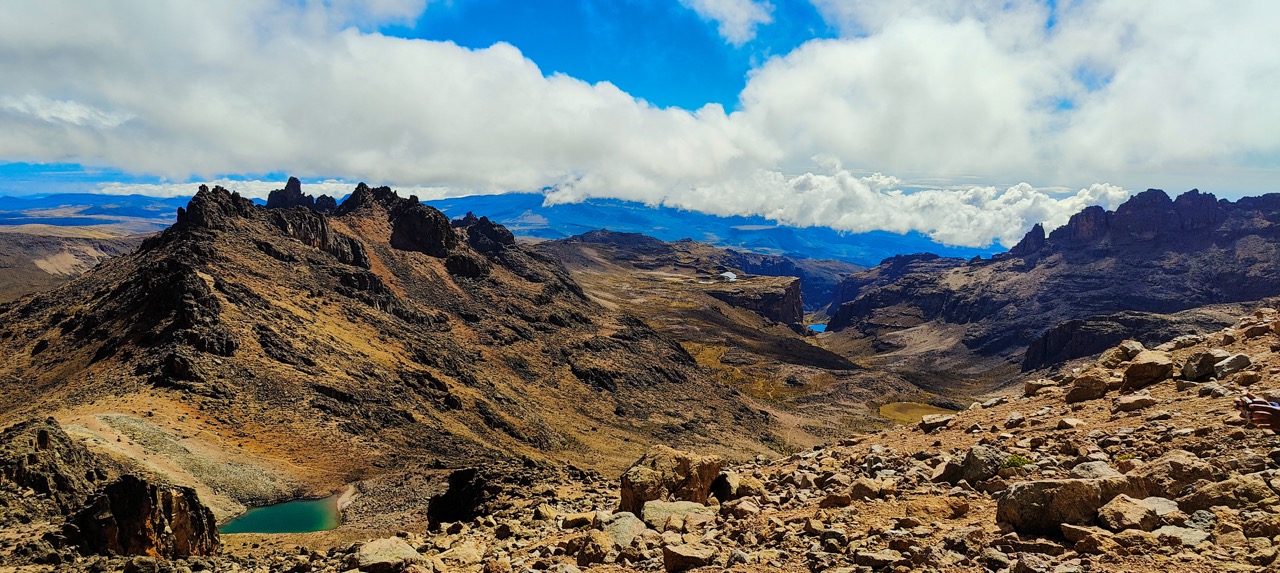
MKWC’s breeding programme integrates controlled herd structures designed to replicate natural social systems, alongside behavioural conditioning that prepares offspring for reintroduction into protected wild habitats. Animals born at MKWC are gradually transitioned to the Mawingu Mountain Bongo Sanctuary, a 776-acre protected forest within the species’ former range in the Mount Kenya forest, managed in partnership with the Kenya Forest Service. Within this landscape, successful adaptation and reproduction have already been recorded, demonstrating the viability of structured rewilding within a secure and well-managed habitat.
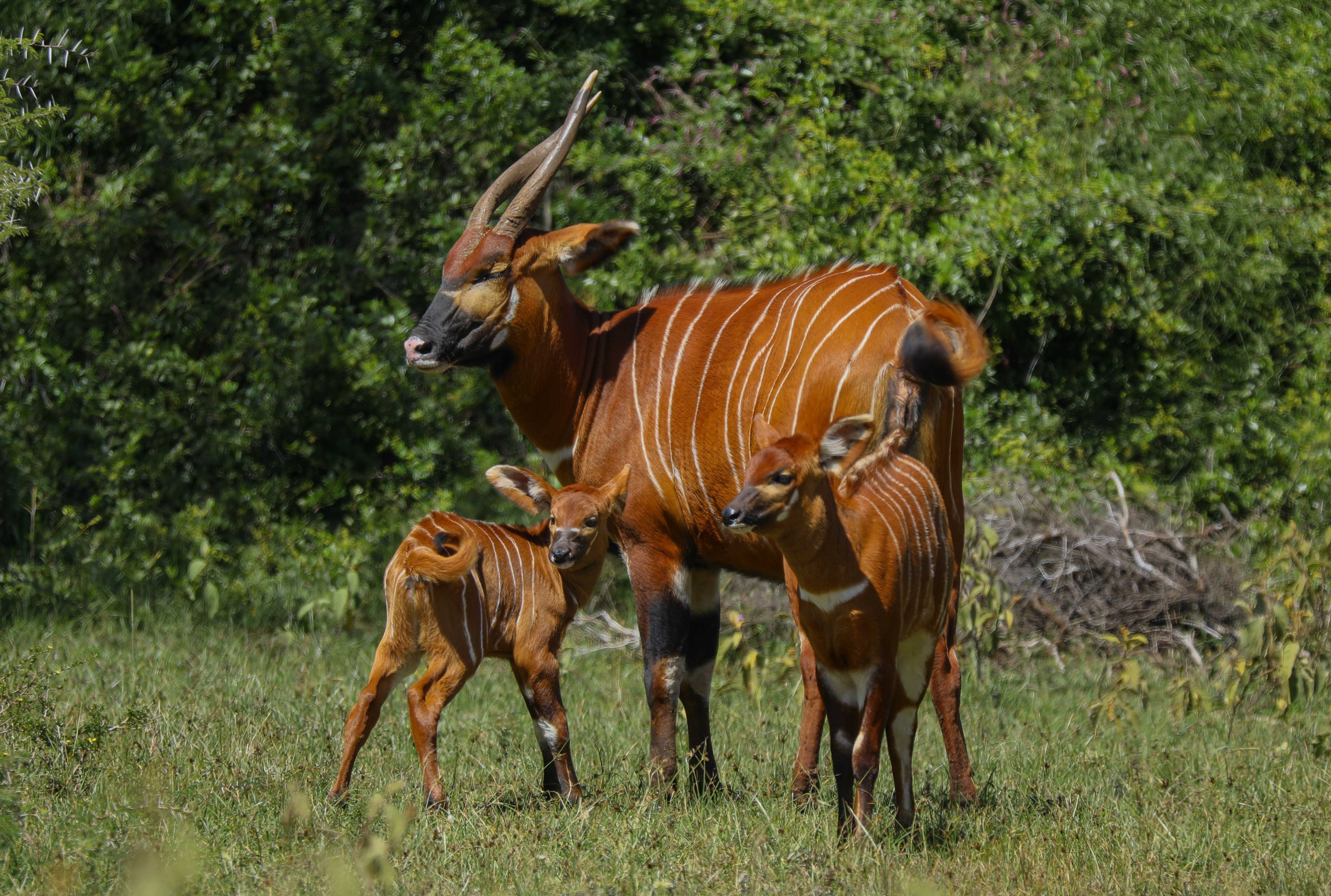
The Mountain Bongo, found only in Kenya, is listed as Critically Endangered on the International Union for Conservation of Nature (IUCN) Red List, with fewer than 60 individuals estimated to remain in the wild. Once widespread across the forests of Mount Kenya, the Aberdares, and Eburu, the species has declined due to poaching, habitat loss, disease, and fragmentation.
Kenya aims to grow the mountain bongo population to at least 750 individuals by 2075 under its national recovery strategy, with MKWC playing a central role in captive breeding, rewilding, and habitat restoration efforts.